
Digital Twin Technology for Personalized Surgery Planning
Picture this: a surgeon walks into an operating room, but before the first incision, they’ve already performed the entire procedure — dozens of times — on a perfect digital replica of your body. Not a generic model. Yours. Your arteries, your bone density, your quirky little anatomical surprises. That’s not science fiction anymore. That’s digital twin technology, and it’s quietly rewriting the rules of surgical planning.
Honestly, when I first heard the term “digital twin,” I thought it sounded like something from a Silicon Valley pitch deck. But dig a little deeper, and you realize it’s one of the most practical, human-centered applications of modern computing we’ve seen in medicine.
What Exactly Is a Digital Twin?
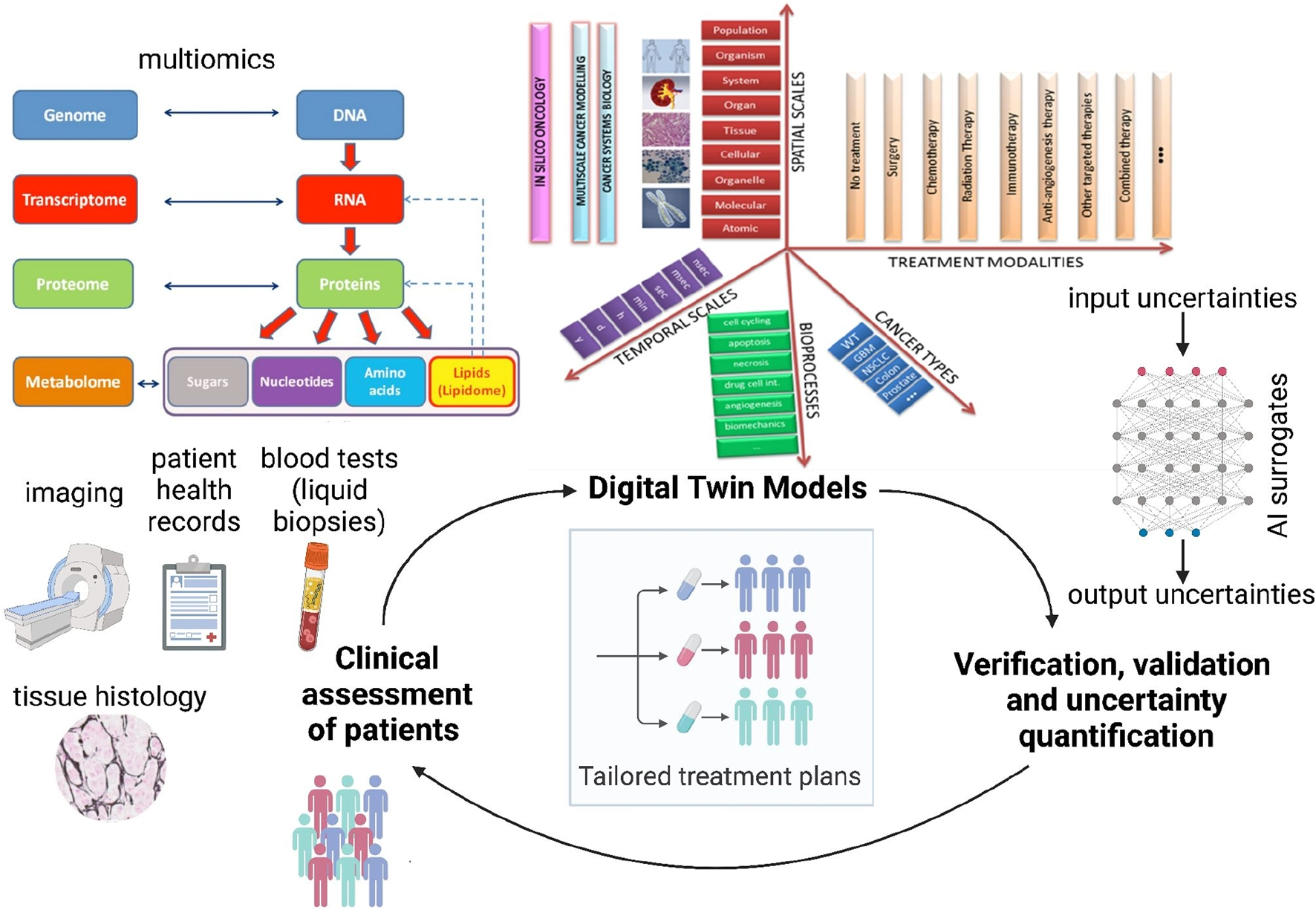
Let’s break it down. A digital twin is a virtual copy of a physical object — or in this case, a person. It’s built from real data: MRI scans, CT images, ultrasound, genetic info, even wearable sensor readings. Then it’s stitched together using AI and simulation software to create a living, breathing (well, digitally breathing) model.
Think of it like a flight simulator, but for the human body. Pilots don’t practice emergency landings on real planes full of passengers. Surgeons shouldn’t have to practice risky maneuvers on real patients either. The digital twin gives them a sandbox.
Why Personalized Surgery Planning Matters
Here’s the deal: no two bodies are identical. Sure, we share the same basic blueprint — two kidneys, one heart, blah blah. But the details? Wildly different. A tumor sitting near a major vessel in one patient might be wrapped around it in another. A knee replacement that works beautifully for a 60-year-old marathoner could fail miserably in a 60-year-old with osteoporosis.
Traditional planning relies on 2D scans and the surgeon’s experience. That’s powerful, no doubt. But it leaves room for guesswork. Digital twins remove a lot of that guesswork.
Key stat: Studies suggest that patient-specific surgical planning can reduce operating time by up to 20% and lower complication rates significantly in complex cases.
How the Technology Actually Works
You might be wondering — how do you go from a scan to a working simulation? It’s a multi-step process, and it’s evolving fast. But here’s the general flow:
- Data collection: High-resolution imaging (CT, MRI, PET) plus functional data like blood flow or electrical activity.
- 3D reconstruction: Algorithms convert those flat images into a three-dimensional model.
- Biomechanical modeling: The model gets properties — tissue elasticity, bone hardness, how blood vessels bend.
- Simulation: Surgeons run “what-if” scenarios. What if we cut here? What if we clamp this artery first?
- Refinement: The twin updates as new data comes in — even during surgery, in some advanced setups.
And yeah, that last point is a bit mind-bending. Real-time updates mean the digital twin isn’t just a pre-op tool. It can guide decisions mid-procedure.
Where It’s Making the Biggest Splash
Not every surgery needs a digital twin. A simple appendix removal? Probably overkill. But in high-stakes, anatomy-heavy procedures, the technology shines.
| Surgical Field | How Digital Twins Help |
|---|---|
| Cardiothoracic surgery | Simulating blood flow through custom vessel geometries before bypass or valve repair |
| Neurosurgery | Mapping tumor margins near eloquent cortex to avoid speech or motor damage |
| Orthopedics | Designing implants that match a patient’s unique bone structure and gait |
| Oncology | Predicting how a tumor will respond to resection vs. radiation vs. chemo |
| Pediatric surgery | Accounting for growth — a twin can simulate how anatomy changes over years |
Pediatric cases are especially fascinating. A child’s body isn’t just a smaller adult body. It’s a moving target. Digital twins can project how a repaired heart valve or reconstructed airway will grow with the patient.
The Role of AI and Machine Learning
Here’s where it gets spicy. Digital twins generate mountains of data. AI chews through that data and finds patterns no human could spot. For example, an AI might notice that a certain vessel geometry predicts a higher risk of clotting after surgery. That insight gets baked into future simulations.
It’s a feedback loop. The more surgeries are simulated, the smarter the system gets. And that collective intelligence can be shared across hospitals — though, you know, privacy and regulatory hurdles are real.
Challenges Worth Acknowledging
Look, I’d love to say this is all smooth sailing. It’s not. There are genuine obstacles:
- Data quality: Garbage in, garbage out. Poor imaging means a poor twin.
- Computational cost: Running high-fidelity simulations takes serious processing power.
- Regulation: The FDA and similar bodies are still figuring out how to classify and approve these tools.
- Adoption curve: Surgeons are busy. Learning a new digital workflow takes time and training.
- Cost: Not every hospital can afford the infrastructure — yet.
That said, costs are dropping. Cloud computing and open-source simulation platforms are democratizing access. What was once a flagship academic medical center exclusive is starting to trickle down.
What Patients Should Know
If you’re facing surgery, you might not need to understand the tech. But you can ask questions. Does your hospital use 3D modeling or simulation for your type of procedure? Have they discussed patient-specific risks? These conversations matter.
And honestly, the shift toward personalization is a good thing. Medicine spent decades treating the “average” patient — a mythical creature who doesn’t exist. Digital twins push us toward treating the actual person in the bed.
The Road Ahead
We’re still early. Most digital twin applications today are pre-operative planning tools. Tomorrow? They could be integrated into robotic surgery systems, adjusting in real time as tissue shifts. They could predict post-op recovery trajectories and flag complications before symptoms appear.
Some researchers are even exploring “digital twin avatars” that patients can interact with — seeing their own anatomy, understanding their own condition. That kind of transparency could transform informed consent from a rushed signature into a genuine dialogue.
Sure, there’s hype. There always is. But beneath the buzzwords, digital twin technology for personalized surgery planning is doing something quietly profound: it’s giving surgeons a rehearsal space, and giving patients a version of themselves that can be studied, tested, and protected before anyone picks up a scalpel.
And that… well, that feels like a future worth building toward.
